Exploring the Potential of SaaS: Transforming the Way We Do Business
DataNudge
July 2023
Businesses in today’s fast-paced and technologically driven world are continuously looking for new ways to improve their operations, increase efficiency, and provide excellent client experiences. Software-as-a-Service (SaaS) is one such revolutionary paradigm that has acquired substantial traction in recent years. SaaS has emerged as a game changer for businesses across all industries due to its capacity to disrupt the traditional software delivery strategy. In this article, we will look at the notion of SaaS, its benefits, and how it is changing the way we do business.
Understanding SaaS
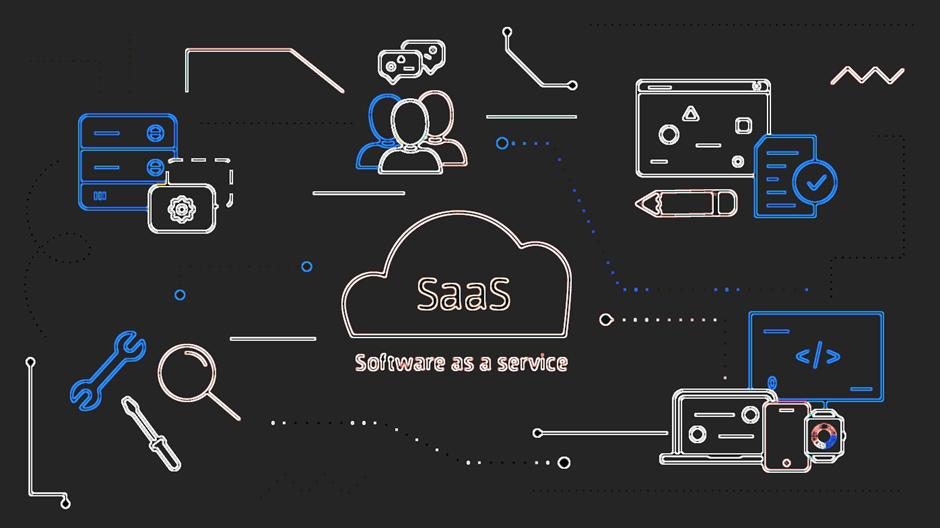
SaaS is a cloud-based software delivery paradigm in which applications are hosted and managed by a service provider and made available to consumers via the Internet. In contrast to traditional software installation, which requires users to purchase licenses and install software on their local devices, SaaS allows users to access applications via web browsers, removing the need for complex installations and upgrades.
Why It Is Needed?
The complexity and evolving nature of cyber threats, the scalability and flexibility requirements of organizations, the ease of deployment and management, access to specialized expertise, and the cost-effectiveness it provides drive the demand for SaaS in cybersecurity. Organizations can boost their cybersecurity posture, improve their ability to detect and respond to threats and focus on core business activities by utilizing SaaS solutions, leaving the duty of maintaining comprehensive security measures to specialized SaaS providers.
The Security Approach of SaaS
In the cybersecurity business, the security approach of Software-as-a-Service focuses on developing robust methods to secure data, applications, and infrastructure from potential threats. SaaS providers prioritize security at various levels to protect the confidentiality, integrity, and availability of customer data. This involves putting in place robust access restrictions and authentication procedures to prevent unauthorized access, encrypting data in transit and at rest, and conducting regular security audits and vulnerability assessments. To monitor and respond to security problems quickly, SaaS providers also invest in advanced threat detection and prevention systems, such as intrusion detection and prevention systems (IDPS) and security information and event management (SIEM) technologies.
Furthermore, businesses frequently follow industry best practices and compliance frameworks such as ISO 27001 and SOC 2 to demonstrate their commitment to security and regulatory compliance. By implementing a thorough security strategy, SaaS providers establish trust in their clients, ensuring that their sensitive data is well-protected in an increasingly complex cybersecurity scenario.
Benefits
Because of the growing panorama of cyber threats and the complicated issues that organizations confront in safeguarding their sensitive data and systems, Software-as-a-Service solutions have become increasingly important in the field of cybersecurity. Here are some of the benefits of SaaS in cybersecurity:
Advanced Threat Landscape
The cybersecurity landscape is continually changing, with complex and persistent attacks appearing regularly. Traditional on-premises security solutions frequently struggle to keep up with these quickly developing threats. SaaS-based cybersecurity solutions have the benefit of real-time updates and constant monitoring by security professionals. By employing cloud-based infrastructure, SaaS providers may quickly release patches, updates, and threat intelligence, ensuring that organizations have the most up-to-date protection against emerging threats.
Rapid Deployment and Ease of Management:
For organizations, deploying and administering complex security systems may be resource-intensive and time-consuming. SaaS solutions, on the other hand, allow for quick deployment with minimal setup. The responsibility for infrastructure maintenance, updates, and system monitoring is transferred to the SaaS provider, allowing organizations to focus on core business operations while benefiting from the knowledge of specialized security professionals.
Scalability and Flexibility:
Organizations frequently face difficulties when scaling their cybersecurity infrastructure to meet changing needs. SaaS allows you to scale security measures up or down depending on your organization’s needs. Whether a firm is experiencing rapid expansion, seasonal changes, or the need to support a remote workforce, SaaS solutions may rapidly adjust to these changing circumstances without the need for large hardware or infrastructure investments.
Cost-Effectiveness:
Implementing and maintaining on-premises security infrastructure can be costly, necessitating substantial upfront investments, continuing hardware and software costs, and specialized employees. In contrast, SaaS solutions often use a subscription-based pricing model, allowing organizations to pay only for the services they use. This removes the need for initial capital outlay, lowers ongoing costs, and provides a predictable cost structure. Furthermore, because the SaaS provider is responsible for infrastructure maintenance, updates, and system upgrades, organizations can avoid the costs associated with these tasks.
The Impact of SaaS Applications on Business
SaaS has a broad range of applications in a variety of businesses and functional areas. SaaS has altered how firms function, from customer relationship management (CRM) and human resources management (HRM) to project management and accounting.
CRM:
SaaS-based CRM technologies have transformed customer relationship management, enabling organizations to expedite sales, increase customer service, and personalize marketing campaigns. Sales teams can track prospects, manage pipelines, and interact efficiently to generate revenue development with centralized databases and real-time data access.
HRM:
HRM solutions delivered as a service simplify and automate basic HR processes such as employee onboarding, performance management, payroll processing, and talent acquisition. These programs enable HR departments to optimize workforce management by streamlining operations, increasing employee engagement, and making data-driven choices.
Collaboration Tools:
Software-as-a-service collaboration tools including project management platforms, communication tools, and file-sharing systems have altered the way teams interact and work together. These solutions facilitate seamless communication, task management, and document sharing, thereby increasing productivity and boosting collaboration within and between organizations.
Financial Management:
SaaS-based accounting and financial management software has improved the efficiency and accessibility of financial processes. These programs offer real-time financial information, automate operations such as invoicing and expenditure management, and allow firms to make data-driven financial choices.
Conclusion
Software-as-a-Service has ushered in a new era of company efficiency, flexibility, and accessibility. Its multiple benefits, such as cost-effectiveness, scalability, and better security, have made it an appealing solution for businesses. SaaS applications have altered essential corporate tasks, allowing for more efficient operations, improved collaboration, and data-driven decision-making. As technology advances, SaaS is prepared to play an increasingly larger part in influencing the future of the company, assisting organizations to prosper in the digital age.
 |DataNudge