Platform-as-a-Service (PaaS) for Businesses and Cybersecurity Strengthening
DataNudge
June 2023
Businesses continuously seek ways to accelerate application development, streamline operations, and strengthen cybersecurity defenses in the ever-changing technological landscape. Platform-as-a-Service (PaaS) has emerged as a game-changing technology, offering organizations a complete platform for securely deploying and managing applications. In this article, we will look at the notion of PaaS, its benefits for businesses, and the cybersecurity factors that make PaaS an essential tool in today’s threat scenario.
Understanding PaaS
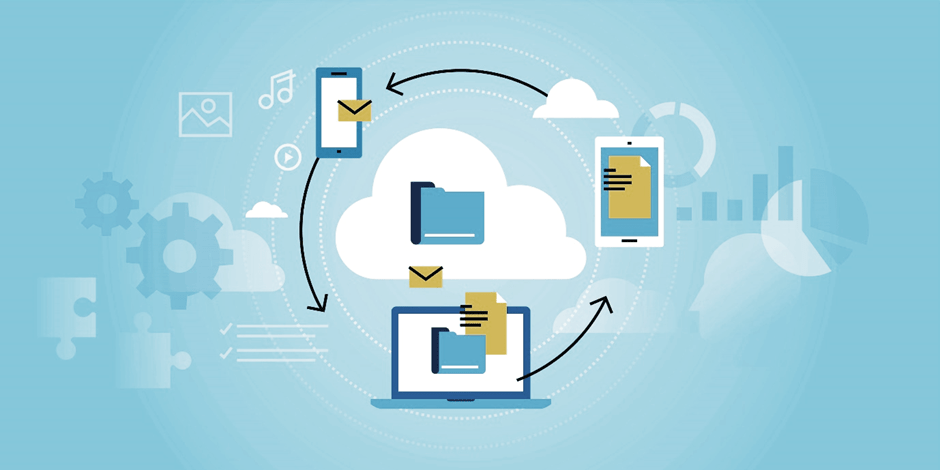
Platform-as-a-Service or PaaS is a cloud computing concept that provides enterprises with a complete development and deployment platform. PaaS provides a framework that comprises operating systems, programming languages, libraries, and development tools, allowing businesses to concentrate on application development rather than infrastructure administration. PaaS providers care for the underlying infrastructure, scalability, and availability, allowing enterprises to focus on developing creative applications.
The Importance of PaaS in Industrial Applications
Platform-as-a-service is important in industrial aspects because of its potential to enable rapid innovation, accelerate application development, and increase operational efficiency. PaaS provides industrial organizations with a comprehensive platform for developing, deploying, and scaling applications while eliminating the complexity of infrastructure management. It enables firms to concentrate on developing industry-specific applications, integrating with current systems, and utilizing new technologies like the Internet of Things (IoT) and Artificial Intelligence (AI). Industrial sectors may drive digital transformation, increase efficiency, optimize supply chains, and gain a competitive advantage in a quickly changing marketplace by leveraging the power of PaaS.
Advantages of PaaS
PaaS offers numerous advantages to industrial organizations, revolutionizing how they operate and innovate. PaaS enables enterprises to swiftly develop and scale applications by providing a comprehensive development and deployment platform, hence fostering innovation and agility in the industrial sector. It simplifies application development processes and infrastructure and allows for easy connection with current systems. PaaS enables industrial sectors to optimize operations, increase efficiency, and gain a competitive advantage in today’s dynamic economy by leveraging sophisticated technologies such as IoT and AI. The advantages are as follows:
Rapid Application Development:
PaaS speeds up the application development by providing pre-configured development frameworks, libraries, and tools. This decreases the time and effort needed to set up a development environment, allowing firms to bring their apps to market more quickly.
Scalability and Flexibility:
PaaS provides scalability to meet changing workloads and user expectations. Businesses may quickly scale up or down their apps based on traffic variations, maintaining optimal performance and user experience. PaaS also allows organizations to add or remove components as needed, allowing them to react to changing business requirements.
Cost Effectiveness:
Businesses can dramatically reduce infrastructure costs by utilizing PaaS. Pay-as-you-go models are available from PaaS providers, allowing organizations to pay only for the resources and services that they consume. This removes the need for capital investments in infrastructure, lowers maintenance expenses, and ensures cost-effectiveness.
Collaboration and Integration:
PaaS promotes development team collaboration by providing shared development environments and version control systems. It allows for smooth interaction with other services such as databases, messaging systems, and identity management solutions, allowing for the development of complex and integrated applications.
High Availability and Disaster Recovery:
PaaS providers frequently operate in geographically scattered data centers, ensuring application availability. They also include disaster recovery measures, such as data replication and backup strategies, to reduce downtime and data loss in the case of a disaster.

Cybersecurity in PaaS Environments
As businesses increasingly rely on PaaS for application development and deployment, cybersecurity becomes an important consideration. Here are some cybersecurity-related issues that businesses should prioritize:
Secure Application Development:
When developing applications on the PaaS platform, businesses must use secure coding practices. Adopting secure coding rules, performing frequent security testing, and leveraging secure development frameworks are examples of eliminating vulnerabilities and providing robust application security.
Data Security and Privacy:
In PaaS systems, sensitive data is frequently stored and processed. Strong encryption measures should be implemented by organizations to secure data both at rest and in transit. They must also guarantee that data privacy standards are followed, as well as install access controls and authentication procedures to prevent unauthorized data access.
Threat Detection and Prevention:
PaaS providers should have strong threat detection and prevention mechanisms in place. Intrusion detection and prevention systems (IDPS), log monitoring, and security information and event management (SIEM) solutions are all part of this. Continuous monitoring aids in the detection and response to security incidents in real-time, reducing possible hazards.
Identity and Access Management:
In PaaS systems, effective identity and access management (IAM) is critical to ensuring authorized access to resources and protecting against unauthorized actions. Organizations should use strong authentication techniques, multi-factor authentication, and role-based access controls to avoid unauthorized access and data breaches.
Regular Security Audits and Compliance:
PaaS providers should undertake regular security audits and assessments to identify and remedy any vulnerabilities or compliance issues. They should follow industry best practices, and security frameworks, and provide openness to clients about their security procedures and compliance certifications.
Conclusion
Platform-as-a-Service has transformed application development and deployment by offering enterprises a robust platform for quickly building, scaling, and managing applications. However, as organizations adopt PaaS, it is critical to prioritize cybersecurity to protect sensitive data and combat growing risks. Businesses may confidently use the benefits of PaaS while limiting cybersecurity risks by embracing secure coding practices, deploying robust security controls, and maintaining regulatory compliance. In this digital age, a strong emphasis on cybersecurity is critical to the success and resilience of PaaS-powered apps.
 |DataNudge