Forward Proxy-Your Shield Against Online Threats
DataNudge
December 2022
A forward proxy is a server that acts as a go-between for a client and a server. Its primary function is to conceal the client’s IP address while also providing security, privacy, and control. Forward proxies are becoming increasingly important in today’s connected world because they allow you to manage internet access, improve security and performance, and enforce compliance. In this blog, we’ll look at what forward proxies are, how they work, and why they’re an important part of any cybersecurity strategy.
What Is a Forward Proxy?
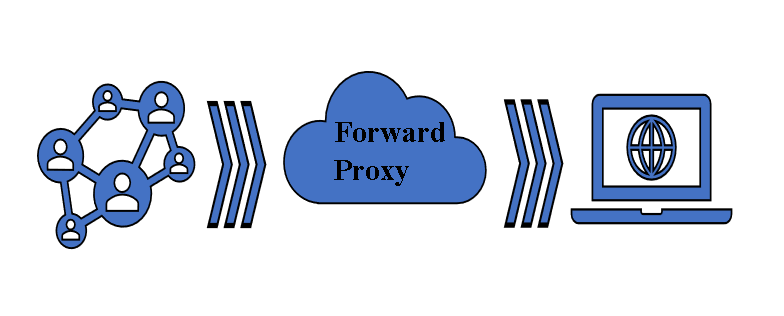
A forward proxy is a server that serves as a connection point between a client and a server. It receives client requests, validates and filters them, and then forwards them to the target server. The target server then returns the response to the forward proxy, which then returns it to the client. The forward proxy acts as a layer of security and control between the client and the server.
How Forward Proxies Work?
When a client requests a resource from a server, it is first routed through the forward proxy. The forward proxy validates the request and filters out any potentially harmful or unwanted content. If the request is approved, the forward proxy sends it to the server, which returns the response to the forward proxy. The response is then forwarded to the client by the forward proxy.
Use of Forward Proxies
A forward proxy serves as an intermediary between network clients and the internet. It acts as a gateway for clients to access the internet by forwarding client requests to the internet and returning internet responses to the clients. A forward proxy can improve security by acting as a barrier between clients and the internet, increase productivity by reducing server load and improving overall performance, improve compliance by controlling internet access in accordance with regulations and company policies, and improve performance by caching frequently requested content.
Implementing a Forward Proxy
It is critical to carefully consider your specific needs and requirements before implementing a forward proxy. There are numerous types of forward proxies, including transparent proxies, anonymous proxies, and high-anonymity proxies, each with its own set of advantages and disadvantages. It’s also critical to keep the forward proxy properly configured and managed, with regular updates and maintenance to keep it effective and secure. To ensure a successful implementation, however, several best practices should be followed.
1) Determine Your Requirements
The first step in implementing a forward proxy is to identify your specific needs and requirements. This will assist you in selecting the appropriate type of forward proxy and ensuring that it is properly configured and managed.
2) Choose the Right Type of Forward Proxy
Forward proxies are classified into three types: transparent proxies, anonymous proxies, and high-anonymity proxies. Select the type that best meets your specific needs and specifications.
3) Proper Configuration
Proper configuration is critical for a forward proxy’s success. To ensure maximum security and performance, ensure that the forward proxy is properly configured.
4) Regular Updates and Maintenance
A forward proxy, like any other piece of technology, requires regular updates and maintenance to remain effective and secure. Check for updates on a regular basis and apply them as needed.
5) Monitoring, Management, and Documentation
The forward proxy must be monitored and managed on a regular basis to ensure that it is performing as expected and to detect and resolve any issues that may arise. Proper documentation of forward proxy configuration and management is required to ensure that it can be maintained and supported in the future.
Use Cases of Forward Proxies
Forward proxies have numerous applications and are used in a variety of industries and settings. Forward proxies play an important role in ensuring security and controlling access to sensitive information in a variety of industries, from education and healthcare to financial services and online gaming. You can better appreciate the importance and value of forward proxies if you understand their various use cases. Some of the most common use cases are as follows:
1) Education and Healthcare
Forward proxies are frequently used in education to control internet access and ensure that students do not access inappropriate or distracting websites. Forward proxies are used in the healthcare industry to ensure secure access to patient data and to prevent unauthorized access to sensitive information.
2) Financial Services and Government Agencies
Forward proxies are used in financial services to control access to sensitive financial information and to prevent unauthorized access to sensitive data. Forward proxies are used by government agencies to control internet access and prevent unauthorized access to sensitive information.
3) Corporate Environments
Forward proxies are used in corporate environments to control internet access and prevent employees from accessing inappropriate or distracting websites.
4) Online Gaming and E-Commerce
Forward proxies are used in the online gaming industry to protect against DDoS attacks and to ensure a stable gaming experience. Forward proxies are used in e-commerce to protect against cyberattacks and to ensure the security of customer data.
Future of Forward Proxies
Forward proxies have a bright future, with new technologies and trends driving innovation and development in this critical field. Forward proxies have a bright future, thanks to advances in cloud computing and artificial intelligence, as well as increased demand for security and integration with other security technologies. You can make the most of the opportunities presented by forward proxies by staying informed about these trends and developments. The followings are some of the current trends and future developments in the use of forward proxies:
1) Cloud Computing
The future of forward proxies is being influenced significantly by cloud computing. Forward proxies are being used to provide secure access to cloud-based resources and to protect businesses as they migrate to the cloud.
2) Artificial Intelligence
AI is also having a significant impact on the future of forward proxies. AI-powered forward proxies can provide real-time threat analysis and protection, making them an effective tool for cyberattack defense.
3) Increased Demand for Security
As cyber threats evolve and become more sophisticated, the demand for secure and effective forward proxies rises. This is driving forward proxy market innovation and development, with new and advanced solutions being developed to meet rising demand.
4) Integration with Other Security Technologies
To provide a more comprehensive and effective security solution, forward proxies are being integrated with other security technologies such as firewalls and intrusion detection systems.

Advantages of Forward Proxies
There are numerous benefits to using a forward proxy, including:
1) Improved Security
Forward proxies act as an intermediary between the client and the internet, which can aid in the protection against malicious actors and the prevention of attacks. A forward proxy can make it more difficult for attackers to target specific clients by masking the client’s IP address. Furthermore, some forward proxies include advanced security features like content filtering, which can keep users from accessing malicious or inappropriate content.
2) Increased Productivity
Because forward proxies can cache frequently requested content, the amount of bandwidth required to access that content is reduced. As a result, bandwidth is freed up for other tasks and server load is reduced, resulting in improved overall performance.
3) Enhanced Compliance
Forward proxies can ensure that internet usage is in accordance with regulations and company policies by controlling internet access. A forward proxy, for example, can be used to prevent employees from accessing unauthorized websites or from using specific applications during work hours.
4) Improved Performance
Forward proxies can improve performance by reducing server load and accelerating content delivery to clients. A forward proxy can reduce the amount of time required to access frequently requested content by caching it, resulting in faster access for clients. This is especially useful for organizations with high internet usage or limited bandwidth.
Disadvantages of Forward Proxies
While there are numerous advantages to using a forward proxy, there are some potential drawbacks, which include:
1) Performance Overhead and Maintainance Cost
The use of a forward proxy can add overhead to the process of accessing content, slowing overall performance. Maintaining a forward proxy can also be costly, requiring resources to ensure the server is up-to-date and secure.
2) Difficulty in Configuration
Configuring a forward proxy can be difficult, requiring specialized knowledge and expertise. Forward proxies can also pose security risks since they sit between the user and the internet, and any security breach in the proxy server can potentially expose the user’s sensitive data.
3) Limitations on Content Access
Forward proxies can restrict access to specific content, which can be inconvenient for users. A forward proxy can become a single point of failure, which means that if the proxy server goes down, all the clients using that proxy server will be unable to access the internet.
Conclusion
A forward proxy is a useful tool for improving internet privacy, security, and performance. It gives you some control over your internet access and can protect you from malicious traffic. However, it can cause latency, be difficult to configure, and may restrict access to specific websites or content. When deciding whether a forward proxy is the right choice for your organization, consider the benefits and limitations, just as you would with any other cybersecurity tool.
 |DataNudge